A Professional Designer's Review of Cloud Outline Icons
First Glance: The Clear-Sky Mood of Outline Design
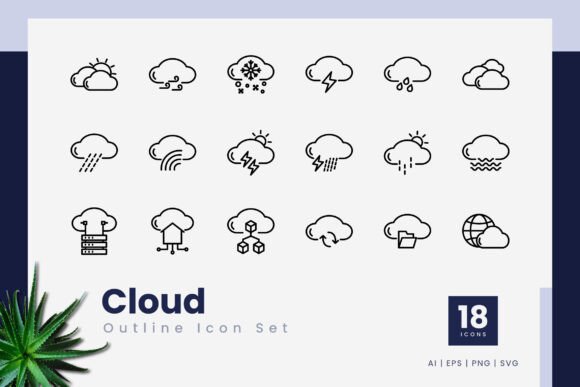
When I first look at the Cloud Outline Icons, I get a sense of clean, modern simplicity. The outline-based nature of this icon set immediately suggests a specific mood for embroidery projects: it feels open, airy, and uncluttered. This isn't a dense, heavy graphic. The visual personality leans towards minimalist and friendly, which is a powerful starting point for a handmade product. For an embroidery designer, this means the finished stitch work will have a distinct character—it won’t feel overwhelming or fussy on a garment or home decor item.
This kind of design naturally belongs to projects where you want a hint of theme without a loud statement. Think of a subtly embroidered kitchen towel for a bakery-themed gift, a single icon on a baby’s blanket for a nursery, or a repeating pattern along the hem of a lightweight tote bag for a boutique. The outline style means the focus is on shape and suggestion, not on filled-in color blocks, which gives you a lot of creative control over how you interpret it with thread.
Putting Clouds to the Stitch: Real-Life Embroidery Scenarios
Let’s walk through a real scenario. I’m considering preparing a batch of custom embroidered tote bags for a small shop’s spring promotion. I want something that feels fresh and universally appealing. These Cloud Outline Icons come to mind. On a natural canvas bag, a scattered row of these outline clouds, stitched in a soft blue or even a stark white, would create a lovely, handmade detail. The open nature of the design means the stitch density won’t be too high, which is excellent for a fabric like canvas that can become stiff with over-embellishment.
For client projects like personalized baby clothes, these icons are a strong candidate. An outline cloud on a sweatshirt pocket or a cap’s side panel offers a sweet, gentle motif without being too babyish. It’s a design that grows with the child. For holiday gifts, like embroidered pillow covers or tea towels, a cloud outline can symbolize peace, calm, or simply a touch of nature, making the gift feel thoughtful and well-designed. In a craft business setting, whether for Etsy listings or craft fair products, this kind of graphic elevates your item. It moves away from generic, clip-art feels and toward a cohesive, branded look that customers associate with quality.
Where the Design Shines and Where It Needs Care
The beauty of an outline-based embroidery file is its clarity on lighter fabrics. On a white, cream, or pastel sweatshirt, using a contrasting thread color will make these icons pop with perfect stitching clarity. They’d also work wonderfully for an embroidered patch applied to a denim jacket—the clean lines would be very distinct.
However, this is where practical judgment comes in. On dark fabrics, like a black cap or a navy tote, an outline design can lose its impact if the thread color isn’t chosen carefully. A very dark blue on black might disappear. You must test for contrast. Also, because they are outlines, the small details and corners are critical. On a highly textured fabric, like a thick blanket, or on a stretchy fabric like a t-shirt, those fine lines could become blurry if not stabilized properly. I would be cautious using these on very small hoop sizes for tiny icons—the machine’s stitch precision needs to be spot-on to keep the outlines sharp.
For products that need frequent washing, like aprons or kitchen towels, the integrity of the outline is key. A running stitch or a light satin stitch for these icons might hold up better than a very dense fill stitch, but again, that depends on the specific embroidery file’s construction. The outline style generally promises less bulk, which is good for washability.
The Impact on Your Product’s Value and Appeal
From a business perspective, using a well-composed design like Cloud Outline Icons directly affects customer trust and your product’s perceived value. When a handmade tote bag or a custom baby gift features a clean, recognizable yet unique icon, it speaks to professionalism. It tells the buyer you’ve curated the design, not just used the first graphic you found. This boosts engagement in your online listings or at your market stall.
For brand consistency, if your shop has a soft, minimalist, or natural vibe, these icons could become a versatile asset across different products—from embroidered apparel to printable mockups for your digital shop. They help create a family of items that feel connected. Their giftability is high because they are not overly niche; a cloud is a pleasant, almost universal symbol.
Essential Designer Notes Before You Hoop the Fabric
My final thoughts are always practical. Before running this embroidery project for a client order or your own stock, do the standard checks. Test the design on scrap fabric first, ideally a piece similar to your final product fabric. Review the stitch density in your software preview; an outline set should generally be lighter. Confirm the hoop size needed for the scale you want—does it fit comfortably on your target item, like a cap’s curved surface or a pillow cover’s corner?
Inspect the small details. Are there any tiny intersections or corners in the icons that might become thread-heavy or tricky? Check thread color contrast by simulating it in black and white mockups. This tells you if the design holds its form without color. Always use the proper stabilizer for your fabric type; this is crucial for maintaining those clean outline lines.
Most importantly, since this is a vector-based graphic set suitable for various uses, confirm the licensing terms before selling finished items or commercial embroidery projects. You need to know if your use in physical products like embroidered bags or patches is covered. The product description mentions suitability for print and illustration, which is promising, but always verify.
Cloud Outline Icons, as a graphics product, presents a lovely opportunity for embroidery designers and makers. Its strength is in its simplicity and mood. By approaching it with this practical, real-use mindset—thinking about fabric, thread, contrast, and final product context—you can transform these digital icons into beautiful, valuable, and enduring handmade pieces.